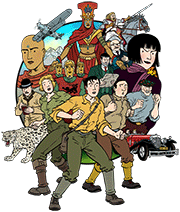


This blog began in 1997 as a single news page called Nucelus. In 2005, during a long wait to move into a new house, I decided to learn some php and MySQL and write my own blogging system, which became inkyBlog and which now powers this, my own Webbledegook blog.
Thank you to my brother, Murray Ewing, for help with some of the more challenging aspects!

The Blake Friedmann Literary Agency came into being in 1982 with the merging of the Carole Blake Literary Agency and the Julian Friedmann Literary Agency. There's a connection with comics right from the start - their first headquarters, in Covent Garden, was above a comic shop which they had to walk through to get to their office. Oliver joined Blake Friedmann in 2003, and he took me on early in 2007 after I'd been at A. P. Watt.
How did you end up as a literary agent? Was it an ambition, or something you fell into?
As an English Literature graduate, I was always curious about working in publishing, about helping to make books happen. In 2002 I undertook an MA in Publishing Studies and during that time I realised that the mix of business and creativity on the agenting side was perfect for me. I love being involved with authors and their projects from the very beginning.
As an agent, what do you spend most of your time doing?
Reading! And finding new markets where I can sell my authors' work.
Once you've got someone a book deal, is that your job finished?
Not at all! The publication process needs to be closely monitored and there are always more deals to be done: all new information needs to be passed on to other editors around the world who are considering the project.
Why do authors need agents?
I think an author needs an agent for a number of reasons. Firstly, I think most creative people aren't always the best advocates of their own work, and nor should they be. They're artists, not sales people. Creating a whole new world is a very personal thing and it's hard for a first timer to be objective about a project so close to their hearts. I believe a good agent will work with an author to improve that project, use their contacts to send it to the right editors and then negotiate the best possible deal for their client. After that, we chase up payments, monitor the marketing and publicity side, and generally take on the role of chief cheerleader all the way down the line.
What advice would you give to someone who would like to get an agent? What's the best way to go about it?
I think every aspiring author should do their research and make sure there's a reason why they're sending a submission to a particular agent at a particular agency. The personal touch goes a long way and the more personal the letter, the more personal response - even if it's a no!
What are some of the mistakes or horrors you regularly see in the slush pile, things that would put you off a manuscript or an author?
Little things like spelling mistakes, poor punctuation, etc is a definite turn off. The old adage of first impressions lasting is definitely true when you receive 20+ submissions a day.
Is the world of publishing a lot of cut and thrust, back-biting and competition, or is it a friendly place where everyone gets along?
I look at the people I socialise with and I have to say, my business is also my pleasure. Publishing is by and large a wonderfully close knit industry in which to work, not just domestically but internationally too.
What kind of work do you mainly deal with personally? Is there a kind of book that Blake Friedmann is especially known for, or anything you definitely don't deal with?
I suppose my taste could be broadly defined as "boy-sy"! Crime, thrillers, historical fiction, interesting memoirs and sports books make up the majority of my list. I personally don't read a great deal of sci-fi and fantasy so I wouldn't be the right person for those genres.
What are some of Blake Friedmann's biggest successes?
Over the years there have been a huge number of highlights for the agency and every year we have a number of bestsellers and prize winners.
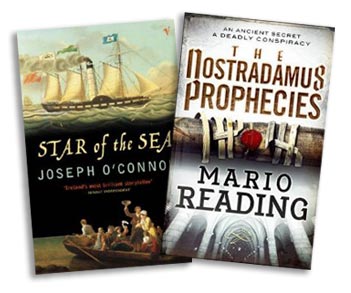
A few years ago Star of the Sea by Joseph O'Connor pretty much coined the term "the Richard and Judy Effect" thanks to the enormous sales boost the book received after appearing on the programme. And rightly so - it is a staggeringly good book and thoroughly deserved to have everyone raving about it on the television.
I've also had a great time selling my author Mario Reading's debut novel, The Nostradamus Prophecies, into 36 markets.
Had you much experience of working with comics prior to taking on The Rainbow Orchid?
I hadn't but that's largely because not many comic writers and illustrators had agents when I started and Blake Friedmann as an agency wasn't actively looking for that type of submission.
Is there a big difference between being an agent for a book of prose and a comic album?
There really isn't and it was the fear that there was a difference that made me wary of representing authors in the comic field. I've learned to my pleasure that the practicalities are very much the same.
Do you read comics, and are there any titles or creators you particularly enjoy?
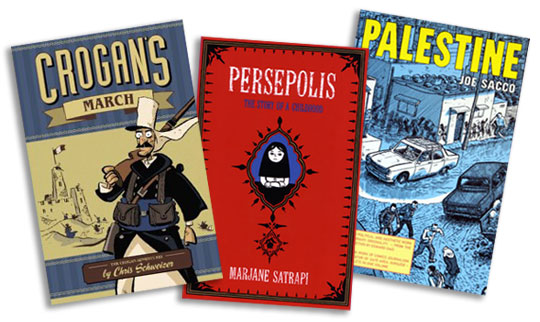
RO aside, I'm a big fan of real life issue based work such as that by Joe Sacco and Marjane Satrapi but at the moment I am very much enjoying Crogan's March by Chris Schweizer - pure fun. When I was a kid in the States I used to buy the Archie comics every month and my grandmother would send me The Beano from England every week, so that was my early comic education!
Is the future all digital, or will there still be a place for paper books?
There will be plenty of room for both. The digital platform is interesting because it allows for audio and visual added content which really allows the reader to appreciate the text on a whole new level.
Working with books and manuscripts all day, can you read for pleasure? What do you like to read for pleasure?
I always try to read something non-work related before I go to bed, even if it's just for five minutes. I'm currently reading Ivanhoe by Walter Scott with Stieg Larsson waiting in the wings.
Thank you very much, Oli!