


This blog began in 1997 as a single news page called Nucelus. In 2005, during a long wait to move into a new house, I decided to learn some php and MySQL and write my own blogging system, which became inkyBlog and which now powers this, my own Webbledegook blog.
Thank you to my brother, Murray Ewing, for help with some of the more challenging aspects!

 2
2

There are quite a number of interesting comic events at Hay this year - take a look at this entry on the Forbidden Planet International blog to learn more. And here's some info on getting to Hay.

Having self-published my own comics for a number of years, I'm used to doing everything myself - and that included all my own marketing and promotion (which I enjoy - to an extent). But when you're published by a mainstream book publisher, and you're suddenly in a world of High Street bookshops, non-comics media, literary festivals and who knows what else, then it could become a full-time job for about three of me, and they'd all need specialist training in how the book trade works and to not be shy about promoting my own book too much. Luckily, alongside the equally important marketing department, there's someone at Egmont who can do all that stuff...
How did you end up as a press officer at Egmont? Did you work for other publishers in different positions, or was PR in the book trade something you aimed towards?
My sights have always been firmly set on the book industry as a workplace and my inclination to talk incessantly guided me into PR and events. I worked on the book shop floor for Borders before getting a great break working for their Head Office managing the chains events and PR, since then I've worked in various roles for Egmont, but most substantially as Press Officer.
In brief, what does your job at Egmont entail?
Setting up events for authors and talking to book influencers (newspapers, bloggers, librarians) about those same authors and enthusing these people about our publishing list.
Do you specialise in a particular area or do you deal with a wide variety of books? What are some of the more high-profile projects you've worked on?
We work together as a team on all of our publishing list, we don't split titles between us arbitrarily. That said, when you need to enthuse someone about a book, it tends to help if you have an interest in it yourself, so sometimes you're drawn to particular titles. The two most high profile things I've been involved with are the launch of the new Winnie-the-Pooh book Return to the Hundred Acre Wood and The David Beckham Academy series.

Do you have a standard template for book promotion, or will each book need to be handled in its own unique way?
Each book is different and always offers particular approaches or opportunities but there are some things we always do. We send new books out to a big list of reviewers, from national press to bloggers, we submit it for awards and we make sure our sales team are well informed about it. After that a lot depends on topical news interest, the author, the content and luck!
Is it difficult to get a new book noticed in today's market?
It's incredibly difficult, just try and find a children's book review section in a national newspaper and you'll see why. There's not much space given to reviews or news about children's book publishing. The children's market is so large and lots of titles are released targeting the same audience, at the same time of year. Come to think of it, I should be paid more!
What are some of the most effective tools in a press officer's armoury for raising awareness of a new book?
The most important tools are always the book and the author. If neither the book or the author have something interesting about them then you've no chance (thankfully this is rarely the case)! We normally discuss books as a team and out of those discussions come interesting angles, topical, new or relevant about a book or its author. Sometime's it's obvious (we sent the picture book Birdsong to bird magazines) sometimes you have to dig a little deeper.
The internet is such an integral part of people's lives now, has it had a big impact on the way a book is promoted?
Personally it's had a big impact because I embrace the internet as an equal realm for promoting books. There are lots of opportunities to promote and talk about books online. Individually, the reach of blogs might be small, but if you can get the online community talking the combined potential is huge. Our book Gone by Michael Grant is our most successful recent example of this.
Do you have to be based in London to do your job effectively?
Technically no, but it does help to be near colleagues in marketing and editorial, so if we all moved outside of London, that would be fine. There are plenty of PRs that could function quite happily from Blackberry alone. Often publicists are sociable people so working from home or on the road all the time wouldn't be what most of us would choose.
Some authors seem to love the limelight, while many would prefer to keep hidden in the background. Is it important to promote the author as much as the book, or is the book the thing?
I think a "promotable" author, one who can string a few words together on a stage, is a benefit, but we often work without it. After all, there's no reason why the ability to write and the ability to perform in front of a crowd should go hand in hand. If authors are nervous or reluctant to publicise themselves we can always find other ways. Often, even the most reluctant author can start small and work up. Many authors find that meeting their public and speaking to journalists can become as invigorating (and as tiring) as writing itself.
Do you think comics present any particular challenge or difficulty in their promotion?
Comics that make it huge, normally do so because of film studio interest, but those instances are rare so it's important to look outside of the typical comics fan base and take advantage of growing interest in the wider world. If children's publishing is a niche area for publicity and comics aimed at young people are a further niche then I think it's fair to say that it can be a challenge. If you get an original concept, with fantastic artwork, then you've got every chance of getting that comic good press.
Do you enjoy reading comics? What are some of your favourites?
I would say I dabble in comics. I really liked Blankets and am a huge fan of the original Dragon Ball series. I watched (and read) Watchmen and will see Kick-Ass. I'll go into Forbidden Planet and have a browse. I'm not heavily into them but I rate them alongside any other genre of writing equally.

What's the best thing about your job?
Meeting the authors and going to festivals and events. For me being at a festival with an author is like having a backstage pass to Glastonbury - it's the same kind of thrill. I think this means I am a book geek.
What other books do you enjoy reading for pleasure?
I read broadly, from children's books for work to serious non-fiction. I've just finished reading 1421 : The Year China Discovered the World. My favourite books are Catch-22 and Nineteen Eighty-Four but I also like the work of Haruki Murakami and Terry Pratchett. There are so many good books in the world that if I don't get into something I'll toss it aside quickly and without remorse. I could spend every minute reading something good and still not get through everything in my lifetime, so I don't have time for books I don't love.
Thank you very much, Alistair!
And a huge thanks to everyone who took time from their busy schedules to indulge me in these interviews - they've all been really fascinating: Oliver Munson (literary agent), Tim Jones (commissioning editor), Peter Marley (editor), and Faye Dennehy (designer).
As Faye says towards the end of the interview, many people don't realise book designers exist, or what their role might involve. Faye is responsible for the look of The Rainbow Orchid as a book, the design of the covers and title pages, the setting of the lettering - and all kinds of important little details you wouldn't normally think of. As well as being artistically creative, she knows her stuff on the technical side too, from desktop publishing to the mysteries of printing and colour.
These interviews have been separating out the jobs, but in reality there is a lot of overlap, with the designer and editor working very closely together on a project - it's a real team effort.
How did you end up becoming a designer? Was it an ambition, or something you fell into?
It was a bit of both. I've always been creative, and Art and Design at school always felt more like play than studying. I ended up at Norwich Art School studying Graphic Design where I could experiment with several areas of graphics including Publishing.
And how about book design in particular - was that something you had an interest in, or was it initially just a job you applied for and got into it that way?
I didn't realise I had such a geeky love of type until I was part-way through my degree. I was lucky enough to work at some great publishers while on work experience (Walker Books and Dorling Kindersley) and by doing that decided that children's publishing was where I really wanted to be. Even as a child I'd made and designed books - I remember playing 'Teachers' and spending more time designing the register than actually taking part in the game!
What are your responsibilities as a book designer? What does a typical day consist of in your job?
My main responsibility are the books themselves (strangely!) - designing them for the correct market, to suit the editorial content and to Egmont's consistently high standards. I work closely with other departments, particularly Editorial, Production and Sales as there are so many variables in producing a book, novelty books in particular.
A typical day consists of finding inspiration (this usually hits you straight off the page from the text the editor has provided or from the style guide a licensor has supplied) and turning that in to a design. Other than physically designing, I can spend my time talking with/sourcing illustrators, organising schedules, creating sales material, picture researching, researching out on location... it can be pretty varied.
Do you do anything besides design work at Egmont? e.g. are you involved in any writing or research?
I like the idea of writing and illustrating and ideas tend to pop in and out of my head, but (as you well know!) my drawing skills are somewhat to be desired and I'm pretty sure my writing could do with a thorough sifting too. If I do anything, it's not for public inspection, purely my own enjoyment!

Besides The Rainbow Orchid, what other titles have you worked on?
I've worked across many brands and licenses in the four years that I've worked for Egmont. Barbie, Ben10, LazyTown, Postman Pat, Fireman Sam, Rupert Bear, Wacky Races, Disney Princess, Mr Men... so many! Most are colour and activity formats, novelty or short storybooks, and all brilliant fun to have been a part of. I have to admit though, my favourite character is Winnie-the-Pooh (I have a deep love for this bear and his world). A couple of years ago, we produced a book called The Wonderful World of Winnie-the-Pooh which was a deluxe format including many original sketches and illustrations by E. H. Shepard. I was able to visit Shepard's archive at the University of Surrey and was thoroughly in awe of his genius.
Am I right in saying you've also worked on the Tintin books?
As a senior designer I'm responsible for Tintin but new Tintin books are created by Moulinsart. The original albums are very rarely changed, so there isn't really a great deal of design work for me to do.
What's the best thing about your job?
I think the best thing is being paid to be creative. It's a bit like someone paying you to have a hobby (though don't tell my boss that!). It's also lovely to see your books on the shelves and in the hands of the consumer (adults or kids).
If someone wanted to work in book design, what areas should they study and develop? What particular skills would you need?
You can come at it from a few angles. I personally took a very direct route from a Graphic Design degree, great work experience and finally a Masters in Publishing Production (an unnecessary top up really but it was something I felt I wanted to do). Many designers come with a graphic design background though you also find a lot of illustrators in designer roles too. I think the main thing to remember is that you have to love books... as objects/design pieces/illustration/art etc. You can learn how to use the software but other than knowing what makes a good page layout or cover design, it's largely about empathy for the content, format, customer (by that I mean book seller) and end user that makes a good designer (in my humble opinion!)
Had you much experience of working with comics prior to taking on The Rainbow Orchid?
I'd not worked on any comics before The Rainbow Orchid so it was a totally refreshing genre to experience. I'd been used to creating licensed books totally from scratch (and therefore pretty much having entire control over their appearance) and suddenly I was presented with a book that was practically finished (plus a real life author/illustrator!). It felt a bit like handling something terribly precious, wearing white gloves and holding it up by the very corners, as opposed to rolling up my sleeves, wading in and organising the masses.
What would you say is the main difference between working on a comic album, a licensed character title, and a children's picture book?
Well, a bit like I've explained above. When I have total freedom of a style guide supplied by a licensor it's almost like collage or putting a slightly free-from jigsaw together. Empathy for the brand is essential, for example a design that suits Ben10 wouldn't be appropriate for Barbie but a large part of the design decision process falls on the shoulders of the individual designer. The licensor, of course, has approval but that's usually to do with the product being 'on brand'.
Working on picture books is a far more fluid and personal process as you sometimes have three or four people involved in a single title - author, illustrator (if they're not one and the same), editor and designer. That relationship is about managing ideas and directions as the book is sometimes a very intimate article for the author and/or illustrator, however the book also needs to be appropriate for the publishing list, which is where the publisher plays a vital role. Comic albums are similar I think, though they seem to be much more intense as a 32-page picture book story is usually far simpler than any form of fast-paced comic album.
Do you read comics, and are there any titles or creators you particularly enjoy?
Well other than one particularly stunning comic album (!!) I like Frank Miller's work. It came about after watching the film 300 (which is probably not a pure way of discovering Miller) but the cinematography was so stunning that I wanted to see how true the film had been to the book. It seems it was loosely based on his art using iconic panels, but not a direct take. To me, both versions are breathtaking.

Working with books and manuscripts all day, can you read for pleasure? What do you like to read for pleasure?
D'you know? I hardly read at all. For me, books are visual, tactile objects so it's about the images, the type, the paper, the layout, the format, sometimes even the smell! The text comes second in my world (Pete [editor] will hate me for saying that!) but then I wouldn't be a designer if it wasn't about The Design.
I saw (see, not read!) an interview with Dieter Rams recently (a respected product designer) and among his Ten Design Commandments he states that 'Good design is unobtrusive'. I like that. Many people don't even realise that book designers exist. They assume the author or illustrator takes full responsibility for how a book appears when actually there's a whole publishing house working behind the scenes to bring the book to fruition. Good design means you don't even realise it's there!
My favourite book is The Phantom Tollbooth by Norton Juster. I haven't read it for a while.
Thank you very much, Faye!
I've worked as an editor in the past, and my wife is a magazine editor and I often go to her with obscure questions about grammar or punctuation, so you might think there's not a lot left for Peter to do. Nothing could be further from the truth! Firstly, no matter how hard you try, textual mistakes will always get through somewhere. Secondly, you can't underestimate the value of an unbiased third-party to question the clarity of certain bits of dialogue or storytelling, or to notice when I've accidentally drawn the handle on the outside of an aeroplane in two different places in two different panels.
And an editor's job doesn't stop there as Peter also deals with the blurb, page plan, deadlines, and countless other things besides. One of those is making sure my research is up to scratch. Here's one of Peter's notes from volume one:
Is 'Orchis ouranio-toxo the binomial name? If so, it should be italicized. 'Apostasiodeae' is the genus, and should be italicized. I think the same applies to Paphiopedelium and Laeliocattleya. Can you confirm the taxonomic group these terms relate to, and then I can say of they need to be italicized or not.
Keeps me on my toes!
How did you end up becoming an editor? Was it an ambition, or something you fell into?
When I was at sixth form, I had a dilemma: I was going to university to study English literature, with the view of working in publishing, or to study psychology, with the view of becoming a psychologist. I chose psychology, but upon graduating, found a summer job proof-reading at the local book publisher. I've been working as an editor ever since.
As an editor, what do you spend most of your time doing in a typical working day?
At any one time I could be working on 30 books all at different stages of development. Depending on what needs attention at any given time, I could spend most of my day reading story submissions, developing manuscripts or working in collaboration with designers and illustrators to develop the book on the page. A big part of my job is juggling my workload to ensure deadlines are met.
Besides The Rainbow Orchid, what other titles have you worked on?
I've worked on hundreds of titles across a range of genres and formats: baby books, picture books, novelty books, character books, colouring and activity, comics and humour.
Am I right in saying that you worked on the two Quick and Flupke books that Egmont released last year?
It was a real privilege to work on English translations of Herge's Under Full Sail and Fasten Your Seat Belts - if not a little nerve racking. I have untold admiration for Hergé's work and wanted to treat it with the upmost respect. I was pleasantly surprised to discover how funny Quick and Flupke episodes are; they show Hergé had a real mischievous side.

I think I remember you mentioning, at our first meeting, that you wrote some Thomas the Tank Engine titles - is writing also a part of your job?
I think I was writing a Thomas the Tank Engine novelty book at the time! I've also written stories for Winnie-the-Pooh, Fireman Sam, Mr Men and even Barbie!
What's the best thing about your job?
Having the opportunity to create something beautiful, affecting and lasting.
What would you say makes a good editor?
It's not only about having a way with words; I think the best editors are able to develop and maintain good relationships. When it comes to editing, it's important to remember that the story isn't your own, but someone else's hard work, and should be treated with sensitivity and respect.
What advice would you give to a writer who wanted to get their book into the best shape possible for publication?
The best thing an aspiring author can do is read, read and read some more. They need to develop an instinct for what works. Personally, I look for children's stories told with a distinctive voice - stories with lots of personality. I think agents play an important role in helping to shape texts before they are submitted to editors. It's also true that agented manuscripts are more likely to be read than those which are unsolicited.
Had you much experience of working with comics prior to taking on The Rainbow Orchid?
Honestly, no... Although I do have a few comics on my bookshelves at home. I also had plenty of experience working with illustrated books, which provided me with a good understanding of how words and pictures interact. The important thing with The Rainbow Orchid was to be thorough with the text and to ensure you hadn't overlooked anything. I learnt lots about comics through working on The Rainbow Orchid.
What would you say is the main difference between working on a comic album, a regular prose book, and a children's picture book?
With comics and picture books there is a real need to make every word count. It's about making sure the stories are told in a concise but affecting way. One of the differences between working on illustrated books - as opposed to straight fiction - is the opportunity to collaborate with designers and illustrators. It's an aspect of my job that I really enjoy.

Do you read comics, and are there any titles or creators you particularly enjoy?
One of my fondest early memories is going to the library with my Dad to borrow Asterix comics. I couldn't get enough of them! I even visited the Asterix theme park in France. I didn't really read comics when I was a teenager, but a few years ago, I got into reading some of the Neil Gaiman comics, particularly The Sandman series. The Rainbow Orchid reignited my interest in the medium, and I can honestly say that it is up there with the best comics available today.
Now I'm blushing! Working with books and manuscripts all day, can you read for pleasure? What do you like to read for pleasure?
I do read outside work, mostly adult fiction and history, which I hoard obsessively. There are times after work, however, when reading is a chore. For this reason, audio books are starting to appeal to me. My dirty secret is sport autobiographies - I can't get enough of them!
Thank you very much, Peter!
Egmont are recognised as the UK's top specialist children's publisher, selling more than 25 million books and 12 million magazines each year. The Egmont Group, head-quartred at its original home in Copenhagen, had an early success with comics when it licensed Donald Duck from Disney in 1949. The company has its origins back in 1878, and until as recently as 1992 was known as Gutenberghus. It now has branches all across Europe, as well as Australia, the Far East, and launching just last year, Egmont USA.
How did you end up at Egmont? Did you work in publishing beforehand?
I started at Egmont as a temp in 1999 to work on the Tintin exhibition at the Science Museum - and eleven years later, I'm still here! I began working in Marketing and PR before switching to Brand Management, and finally to my current role as commissioning editor. I did have a few jobs before publishing but I doubt you want to hear about my work in the sachet factory (riveting though it was... )
In brief, what does your job at Egmont entail?
As a commissioning editor for Egmont Press, I look after our classic character publishing including Tintin, Winnie-the-Pooh, The Wind in the Willows, Miffy, Babar and The Little Prince. I'm especially interested in commissioning new graphic fiction - it's such a shame that for UK children Tintin and Asterix are the only comics in their section of the bookshop.
Can you explain how Egmont UK is set up?
There are two divisions:
Egmont Publishing Group (EPG) deals with licensed characters such as Thomas the Tank Engine, Barbie, Waybuloo, Ben 10 and Timmy Time across books and magazines. They are predominantly for pre-school children and based on characters that appear in TV shows.
Egmont Press, which is where The Rainbow Orchid sits, is our original fiction and picture books division, and includes books by Michael Morpurgo, Jamila Gavin, Andy Stanton, Lemony Snicket, Julia Donaldson as well as A. A. Milne's Winnie-the-Pooh books, Hergé's Tintin and De Brunhoff's Babar.

What are Egmont's biggest sellers?
Thomas the Tank Engine and Winnie-the-Pooh were our biggest sellers in 2009, along with the pre-school children's series Waybuloo. In fiction, Andy Stanton's Mr. Gum books continue to be popular with children and their parents - their insane humour is irresistible.
Will Egmont be doing any kind of special promotion on the Tintin books to coincide with the Spielberg film?
With any major Hollywood film, the studios like to keep their cards close to their chest, and Tintin is no exception, so it's a bit too early to say what might happen with film books. I'm looking forward to the film as much as the next Tintin fan, though!
How and when did you first discover Tintin?
Part of my family are Dutch and when I was but a strip of a lad my cousins used to read Tintin to me on visits to Holland. I've been an addict pretty much ever since, and I've probably read each book hundreds of times. What's so special about them is that they keep on revealing new delights - I recently re-read the scene in The Calculus Affair, where Tintin and Haddock hitch a lift with an Italian, and literally cried with laughter. It's even more hilarious when you've encountered real Italian drivers!
Am I right is saying that you used to run your own Asterix fanzine?
I was hoping that everyone had forgotten about the Asterix fanzine! A friend and I produced it when we were 12 and sold it to our school friends at the bargain price of 15p. I think our print runs were about 10 copies and the material was composed of reviews, crosswords and sketches. Most of the proceeds were used to buy fizzy cola bottle sweets.
How do you think the UK comic scene looks from your position as a major book publisher?
My personal view is that there just aren't enough comics that are for children. Though there's been a growth of comic publishing in the UK, it's been primarily based in the graphic novel section of the bookshop, whereas in the children's section it's still mainly Tintin and Asterix. I think this is a great shame, given the potential of the medium to tell stories that others can't.
What are some of your personal favourite comic reads?
Apart of course from The Rainbow Orchid, I've been enjoying the Blake and Mortimer books produced by Cinebook recently. It's great to see this classic of ligne claire finally translated into English. In adult comics, Fun Home by Alison Bechdel is a superb read and is usually the first book I give to comic sceptic friends. I also devour any new volume of Bill Willingham and Mark Buckingham's Fables.

Will Egmont be moving into the realm of e-books?
Glad you asked - our first range of e-books were launched this month! [April] Ten titles are now available from Waterstone's, WHSmith and Amazon, including Jamila Gavin's Coram Boy, Michael Morpurgo's War Horse, picture book favourite The Velveteen Rabbit. Further titles are launching soon.
Is the future all digital, or will there still be a place for paper books?
As publishers we have to face the challenge of e-books - they're not going to go away - but I still see a future for the printed book, too. There are some things that print does best (for example books for very young children) and I think comics are definitely one of those.
What's the best thing about your job?
The most rewarding thing is working with talented authors and illustrators and seeing children respond to their books. It's also enormous fun working with the talented people at Egmont.
What other books do you enjoy reading for pleasure?
I'm a bit of an omnivorous reader, flitting about between fiction and non-fiction - the last novel I read was The Pursuit of Love by Nancy Mitford - a very funny and sad book set near where I live in Gloucestershire. In non-fiction I've just started Neil Sheehan's colossal book about John Paul Vann, A Bright, Shining Lie, which tells the story of the American involvement in Vietnam through the experiences of one officer.
Thank you very much, Tim!
More information here. Edit: Steve Holland's excellent obituary here.
The Blake Friedmann Literary Agency came into being in 1982 with the merging of the Carole Blake Literary Agency and the Julian Friedmann Literary Agency. There's a connection with comics right from the start - their first headquarters, in Covent Garden, was above a comic shop which they had to walk through to get to their office. Oliver joined Blake Friedmann in 2003, and he took me on early in 2007 after I'd been at A. P. Watt.
How did you end up as a literary agent? Was it an ambition, or something you fell into?
As an English Literature graduate, I was always curious about working in publishing, about helping to make books happen. In 2002 I undertook an MA in Publishing Studies and during that time I realised that the mix of business and creativity on the agenting side was perfect for me. I love being involved with authors and their projects from the very beginning.
As an agent, what do you spend most of your time doing?
Reading! And finding new markets where I can sell my authors' work.
Once you've got someone a book deal, is that your job finished?
Not at all! The publication process needs to be closely monitored and there are always more deals to be done: all new information needs to be passed on to other editors around the world who are considering the project.
Why do authors need agents?
I think an author needs an agent for a number of reasons. Firstly, I think most creative people aren't always the best advocates of their own work, and nor should they be. They're artists, not sales people. Creating a whole new world is a very personal thing and it's hard for a first timer to be objective about a project so close to their hearts. I believe a good agent will work with an author to improve that project, use their contacts to send it to the right editors and then negotiate the best possible deal for their client. After that, we chase up payments, monitor the marketing and publicity side, and generally take on the role of chief cheerleader all the way down the line.
What advice would you give to someone who would like to get an agent? What's the best way to go about it?
I think every aspiring author should do their research and make sure there's a reason why they're sending a submission to a particular agent at a particular agency. The personal touch goes a long way and the more personal the letter, the more personal response - even if it's a no!
What are some of the mistakes or horrors you regularly see in the slush pile, things that would put you off a manuscript or an author?
Little things like spelling mistakes, poor punctuation, etc is a definite turn off. The old adage of first impressions lasting is definitely true when you receive 20+ submissions a day.
Is the world of publishing a lot of cut and thrust, back-biting and competition, or is it a friendly place where everyone gets along?
I look at the people I socialise with and I have to say, my business is also my pleasure. Publishing is by and large a wonderfully close knit industry in which to work, not just domestically but internationally too.
What kind of work do you mainly deal with personally? Is there a kind of book that Blake Friedmann is especially known for, or anything you definitely don't deal with?
I suppose my taste could be broadly defined as "boy-sy"! Crime, thrillers, historical fiction, interesting memoirs and sports books make up the majority of my list. I personally don't read a great deal of sci-fi and fantasy so I wouldn't be the right person for those genres.
What are some of Blake Friedmann's biggest successes?
Over the years there have been a huge number of highlights for the agency and every year we have a number of bestsellers and prize winners.
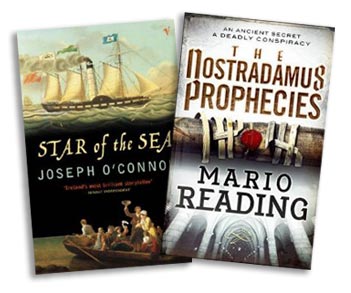
A few years ago Star of the Sea by Joseph O'Connor pretty much coined the term "the Richard and Judy Effect" thanks to the enormous sales boost the book received after appearing on the programme. And rightly so - it is a staggeringly good book and thoroughly deserved to have everyone raving about it on the television.
I've also had a great time selling my author Mario Reading's debut novel, The Nostradamus Prophecies, into 36 markets.
Had you much experience of working with comics prior to taking on The Rainbow Orchid?
I hadn't but that's largely because not many comic writers and illustrators had agents when I started and Blake Friedmann as an agency wasn't actively looking for that type of submission.
Is there a big difference between being an agent for a book of prose and a comic album?
There really isn't and it was the fear that there was a difference that made me wary of representing authors in the comic field. I've learned to my pleasure that the practicalities are very much the same.
Do you read comics, and are there any titles or creators you particularly enjoy?
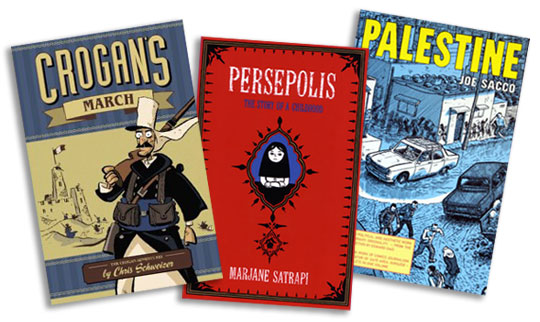
RO aside, I'm a big fan of real life issue based work such as that by Joe Sacco and Marjane Satrapi but at the moment I am very much enjoying Crogan's March by Chris Schweizer - pure fun. When I was a kid in the States I used to buy the Archie comics every month and my grandmother would send me The Beano from England every week, so that was my early comic education!
Is the future all digital, or will there still be a place for paper books?
There will be plenty of room for both. The digital platform is interesting because it allows for audio and visual added content which really allows the reader to appreciate the text on a whole new level.
Working with books and manuscripts all day, can you read for pleasure? What do you like to read for pleasure?
I always try to read something non-work related before I go to bed, even if it's just for five minutes. I'm currently reading Ivanhoe by Walter Scott with Stieg Larsson waiting in the wings.
Thank you very much, Oli!

Don't forget, if you're going to the Bristol International Comic Expo at the end of May (not long now) you can get your own copy a full month before the shops and everyone else.
After my Egmont meeting I made my way to the South Bank where I attended the inaugural meeting of the Comica Social Club, which was a very nice way to end the day. Along with visiting Cartoon County on Monday I've had an unusually comicky-sociable week!
 previous